
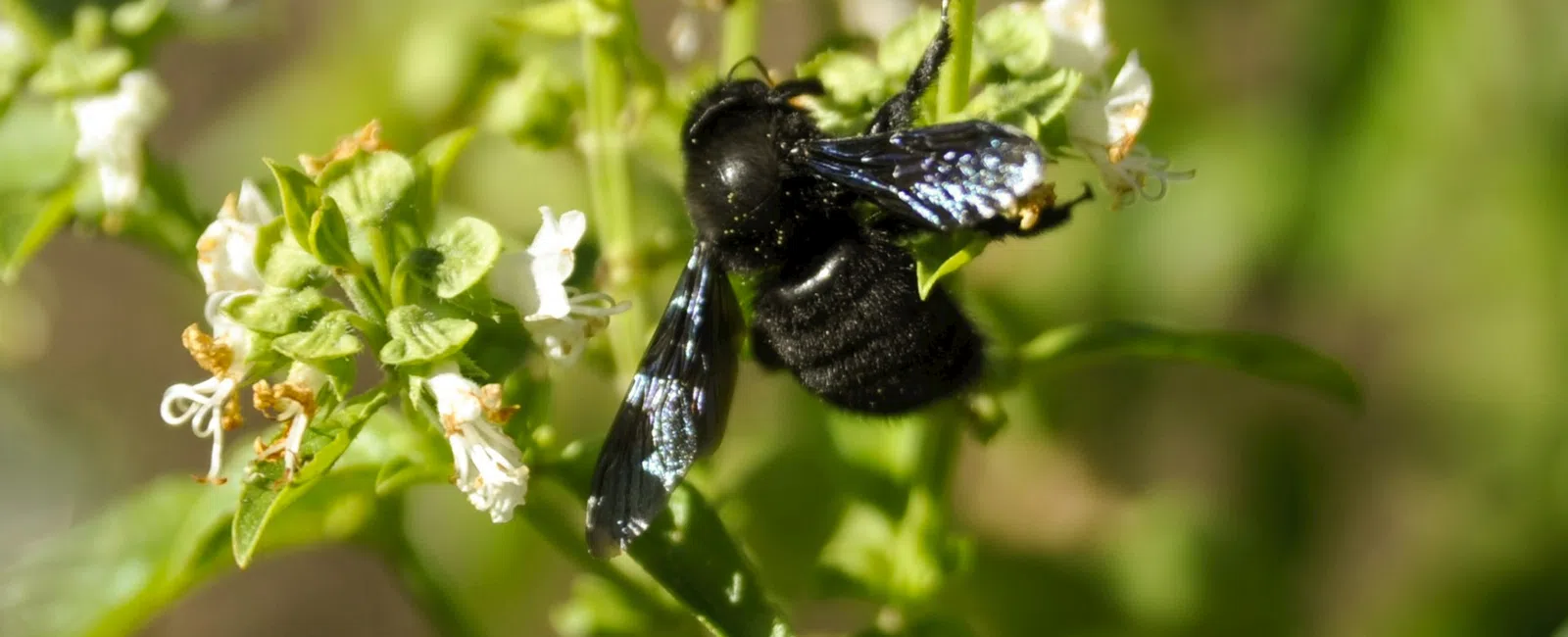
What Is A Carpenter Bee
The insect people call a big black bee or a wood bee is almost always a carpenter bee. They are large, round, and loud in flight, and they look a lot like a bumblebee at first glance. The quickest way to tell them apart is the abdomen: a carpenter bee has a shiny, hairless, black rear section, while a bumblebee is fuzzy all over with yellow bands.
That shiny back end matters because it points to behavior. Bumble bees nest in the ground and pollinate your garden. Carpenter bees pollinate too, but the females bore into wood to lay their eggs, and that is where the trouble starts for your home.
Do Carpenter Bees Sting?
The males that dive-bomb your head near the porch cannot sting at all. They have no stinger and are only defending their territory. The females can sting, but they are docile and rarely do so unless you grab one or corner it.
So carpenter bees are not a serious threat to your family the way a paper wasp nest by the front door is. The risk they carry is to your house, not to the people in it, and that risk grows the longer they are left alone.
How Carpenter Bees Damage Wood
A female carpenter bee drills a nearly perfect round hole, about the width of a finger, straight into a piece of wood. Once she is an inch or so deep, she turns and tunnels along the grain to build a gallery for her eggs. A fresh carpenter bee nest is often marked by a small pile of sawdust on the ground below and yellowish staining around the entry hole.
A single season of one bee is minor. The problem is that carpenter bees return to the same wood year after year, and so do their offspring. Existing carpenter bee holes get reused and extended, new tunnels branch off the old ones, and over several years a board that once had one clean hole can hold a network of galleries running a foot or more through the wood.
What Ignoring Them Really Costs
Left unchecked, carpenter bee activity compounds in three ways that a first-year hole never hints at.
The tunnels themselves weaken the wood from the inside. Fascia boards, railings, and fence posts lose structural strength as galleries multiply, and softened wood eventually sags, splits, or gives way under normal weight.
Woodpeckers make it worse. Birds hear the larvae inside the tunnels and tear open the wood to eat them, turning a tidy round hole into a ragged gash several inches long. In many South Florida yards, the woodpecker damage ends up larger than the bee damage that caused it.
Then there is moisture, which is the part that hurts most in our climate. Open tunnels channel rain and humidity deep into the wood, and in Broward County that means rot, fungus, and the kind of soft, crumbling board that invites other pests. What began as a cosmetic hole becomes a repair job.
Are Carpenter Bees Worse Than Termites?
Termites eat wood as food and can hollow out framing on a large scale, often hidden inside walls. Carpenter bees do not eat wood; they excavate it to nest, so the damage is usually slower and more localized to exposed outdoor wood.
That does not make carpenter bees harmless. It makes them a different, more visible problem. If you are unsure which one you are dealing with, the difference between wood-destroying insects is worth understanding before you assume it is only bees. Either way, wood damage that keeps expanding is a reason to act rather than wait.
Where Carpenter Bees Strike South Florida Homes
Most Broward homes are concrete block and stucco, so people assume they are safe. Carpenter bees simply go for the wood you do have. In this region, they most often target unpainted or weathered fascia and soffit boards under the roof, wooden fences and gate posts, deck railings and stairs, pergolas and patio covers, dock pilings and boards near the water, and wooden playsets and sheds in the backyard.
Bare, aged, and sun-softened wood is the easiest target. That is why the same fence rail or fascia board gets hit again every year while the freshly painted trim next to it stays untouched.
How To Get Rid Of Carpenter Bees
Treatment works best when it targets the tunnel, not the bee in the air. Spraying a bee flying around the yard does nothing for the gallery already inside your fascia. The bees have to be treated at the nest, and the tunnels have to be sealed afterward so a new bee does not move into the empty hole next season.
Timing matters too. Plugging a hole too early traps live bees that will simply chew a new exit, and plugging it at the wrong point in the season can seal larvae inside to mature and emerge later. Getting the sequence right is most of the reason store-bought sprays and wooden plugs so often fail here, a pattern that shows up with a lot of do-it-yourself pest control in South Florida.
How To Prevent Carpenter Bees
Prevention comes down to making your wood unattractive. Painted and sealed wood is far less likely to be bored than bare or stained wood, so keeping fascia, railings, and fences finished is the single most effective step. Filling and sealing old holes each year removes the scent cues that draw returning bees, and swapping the most exposed wooden elements for composite or vinyl over time takes the target away entirely.
For homes that get hit every spring, the most reliable protection is not a yearly scramble but consistent coverage. That is the logic behind year-round pest protection in Florida, where recurring service catches seasonal pressure before it settles in.
When To Call Greg's
If you are seeing round holes, sawdust piles, staining, or the same big black bees returning to the same spot each year, the damage is already underway, and it will not stop on its own. Greg's Aggressive Pest Solutions bee and wasp removal service has protected Broward County homes for more than 32 years, and our bee and wasp removal service treats carpenter bees at the source, seals the galleries, and helps you keep them from coming back.
We are family-owned and state-certified; our monthly protection plans cover 25 or more common household pests, and every treatment is applied by certified technicians using pet-conscious and family-conscious methods. Call today to schedule an inspection before this season's holes become next season's repairs.