
The Two Centipedes You Will Actually Meet in South Florida
Most people lump all centipedes together, but in a Broward County home there are really two you are likely to run into, and they could not be more different.
The House Centipede
This is the fast one. Grayish-yellow, an inch or so long, with those long delicate legs that make it look far bigger and far worse than it is. The house centipede is the creature in the bathroom, and here is the part that surprises people: it's nearly harmless. It can technically bite in self-defense, but it rarely breaks human skin, and it has no interest in you at all. It is indoors hunting other bugs.
The Florida Blue Centipede
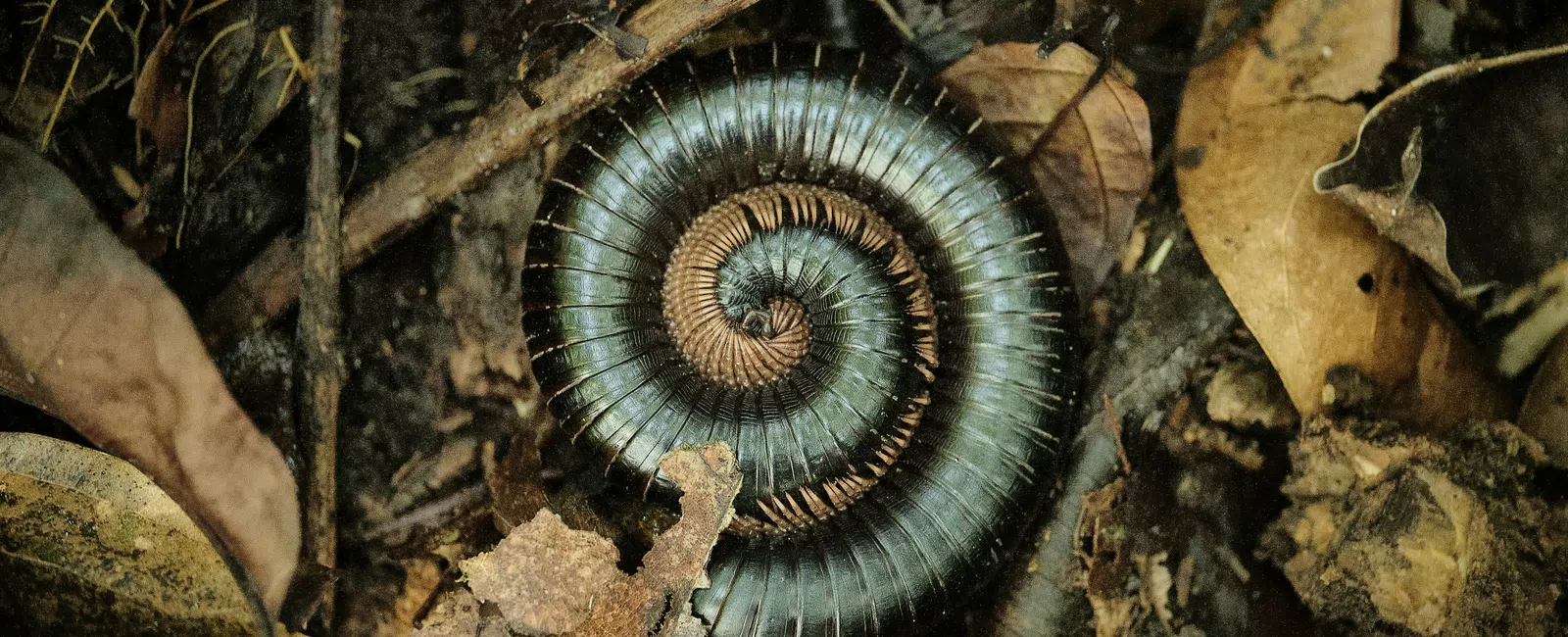
This one is different, and it is the one that earns centipedes their bad reputation here. The Florida blue centipede is larger, flattened, and darker, with a bluish or greenish body and orange legs. Unlike the house centipede, its bite is genuinely painful, closer to a wasp sting, and it can cause real localized swelling and soreness that lasts hours. It is not usually medically dangerous to a healthy adult, but it hurts, and reactions can be stronger in children or anyone sensitive to venom.
Why Are Centipedes in My House in the First Place?
Centipedes are hunters, and hunters follow two things: moisture and prey. South Florida hands them both, year-round.
Start with the moisture. Centipedes breathe in a way that causes them to lose water easily, so they die out quickly in dry air and thrive in damp air. Our humidity, our afternoon rain, and the condensation around slab foundations and plumbing give them exactly the damp harborage they need. This is also why there is no real off-season for them here, the same reason our year-round pest pressure never really lets up the way it does up north.
What Do House Centipedes Eat?
House centipedes are predators, and their menu is a list of the pests you like even less than centipedes.
- Cockroaches and their young
- Silverfish
- Ants
- Spiders
- Bed bug nymphs and other soft-bodied insects
A centipede indoors is typically a sign that there is a standing insect population in your home large enough to feed a predator. If you are seeing centipedes regularly, you very likely also have silverfish or roaches you are not seeing. The centipede is the symptom. The prey is the actual problem.
That is why killing the centipede you spotted does nothing. Remove one and another moves into the same buffet. The only thing that reliably clears centipedes out is removing what they came to eat.
How to Keep Centipedes Out of Your Home
You cannot change the South Florida climate, but you can make your home a far less appealing place for a centipede to move in. Prevention comes down to two levers: cutting the moisture and closing the doors.
Reduce the Damp
- Run a dehumidifier or keep the AC steady in the humid parts of the house, especially bathrooms, laundry rooms, and any space that stays muggy.
- Fix dripping faucets and slow leaks under sinks, which create the exact damp pockets centipedes seek out.
- Move mulch, leaf litter, and damp debris away from the foundation, since that is where they gather before coming inside.
Close the Entry Points
Centipedes get in through the same gaps that other pests use: cracks in the foundation, worn door sweeps, torn screens, and openings around pipes and utility penetrations. Sealing those gaps is one of the highest-value things you can do, and thorough pest-proofing throughout a Broward home closes the same entry points that let in roaches, ants, moisture-seeking bugs, and centipedes.
Prevention lowers the odds. What it will not do on its own is eliminate an established insect population that is already feeding them, which is where professional help comes in.
When to Call a Professional
A single house centipede once in a while is not a reason to call anyone. But a few situations do warrant a certified technician:
- You are seeing centipedes regularly, which points to a prey population living in the walls, cabinets, or crawl spaces.
- You have found a Florida blue centipede indoors, especially where children or pets spend time.
- Someone has been bitten and had swelling or pain beyond a minor mark.
- You are also spotting roaches, silverfish, or ants, which confirms the food source is inside.
A professional does not just treat the centipedes. The work targets the entire chain: moisture conditions, entry points, and, above all, the household pests that centipedes feed on. Clear the prey and the predators leave on their own.
Get to the Root of Your Centipede Problem
If centipedes keep turning up in your Broward County home, the fix is not chasing them one at a time. It is removing the bug population that keeps drawing them in.
Greg's Aggressive Pest Solutions is a family-owned, state-certified team that has protected South Florida homes for more than 32 years, with monthly plans that cover centipedes alongside more than 25 other common household pests. Call us today to learn more about our household pest control services, or reach us online to schedule a technician at your home.