
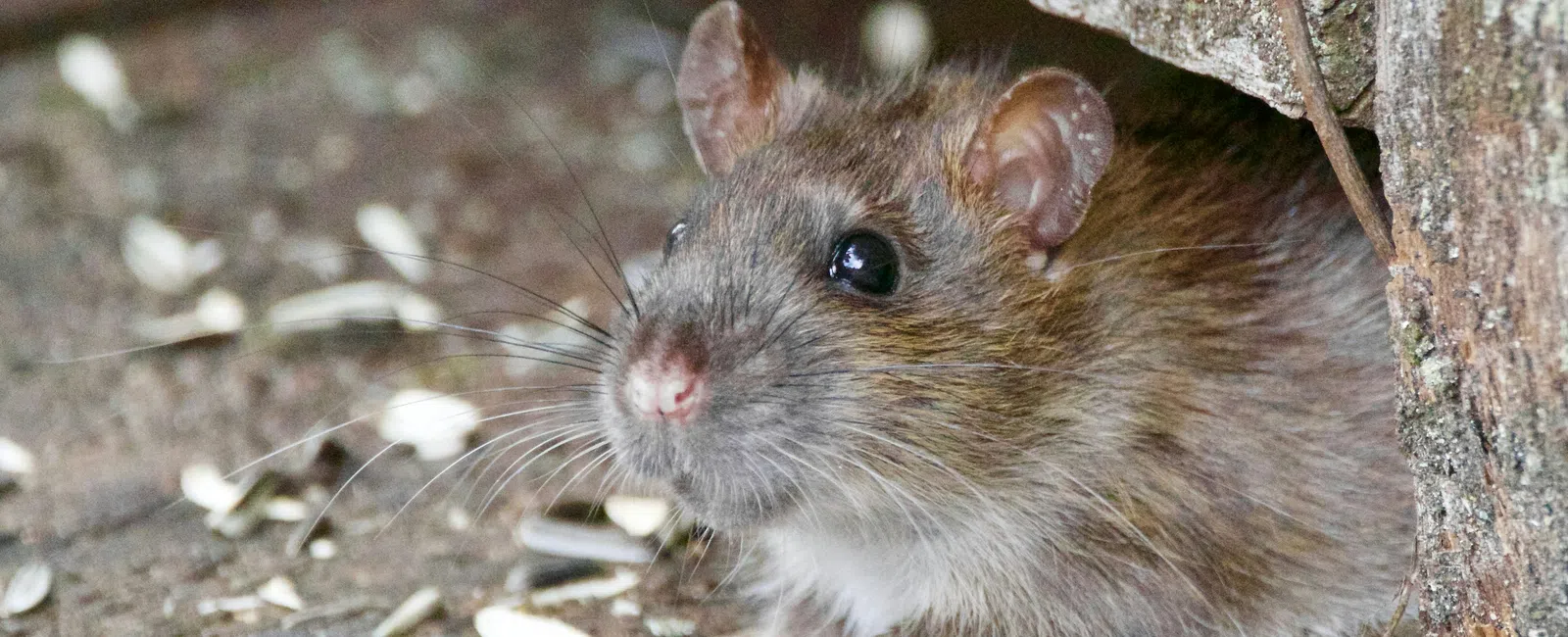
Why Roof Rats Love South Florida Attics
Roof rats earn their name honestly. Unlike the ground-dwelling Norway rat, roof rats are expert climbers that prefer to live high and dry. An attic gives them exactly what they want: shelter, safety from predators, and a quiet, undisturbed place to nest. Our warm, humid climate keeps roof rats active all year, with no cold season to slow their breeding.
Add dense landscaping, mature shade trees, and neighborhoods full of connected rooflines, and South Florida becomes close to ideal for them. Once one rat finds a way in, others follow, and a minor nuisance turns into an established colony faster than most homeowners expect.
How Roof Rats Get In: Tile Roofs, Soffits, And Branches
Roof rats reach your attic from above, which is what makes them so tough to stop. They run along power lines, fence tops, and overhanging tree branches, then drop onto the roof and hunt for any gap about the width of a quarter.
Common entry points on South Florida homes include:
- Gaps where the soffit meets the roofline
- Lifted or cracked barrel and tile roofing
- Worn or missing vent and gable screens
- Openings around plumbing stacks, eaves, and fascia
Tile roofs are especially forgiving to a determined rat. The spaces beneath and between the tiles act as both a highway and a hiding spot. Sealing these openings is one of the most important steps in any real solution, and it is the kind of detailed work a proper home pest-proofing inspection is designed to catch.
The Noises And Signs You Notice First
Most homeowners hear roof rats long before they see one. The signs of rats in the attic usually appear in this order:
- Scratching, scurrying, or gnawing sounds overhead, most often after dark
- Small, dark droppings with pointed ends in the attic or along walls
- Greasy smudge marks on beams and entry points where rats travel
- Gnaw marks on wood, wiring, and stored boxes
- A musky, ammonia-like odor that grows stronger as the colony does
If you are hearing noises in the attic at night and then spotting droppings, you are likely well past the maybe stage.
The Damage Happening Above Your Ceiling
This is where a roof rat problem gets expensive. Rats gnaw constantly to keep their teeth worn down, and your attic is full of things to chew. They shred insulation to build nests, which lowers its efficiency and pushes up cooling costs in a place where the AC runs nearly year-round.
Worse, they chew through electrical wiring, and exposed wires in an attic are a real fire hazard. They also foul insulation and stored belongings with urine and droppings. Left alone, a colony spreading through the attic and walls can rack up thousands of dollars in damage.
Health Risks You Cannot See
Roof rats are not only a structural problem. Their droppings, urine, and nesting material can carry bacteria and viruses that turn airborne when disturbed, which matters a great deal when the mess sits in the attic directly above your living space. Rodents are linked to serious illnesses, which is a big part of why rodent control matters well beyond the noise and the damage. Cleaning up after an infestation safely takes far more than a broom and a trash bag.
Why DIY Traps And Bait Usually Fail
If you have already set snap traps or store-bought bait and still hear scratching, you are not doing it wrong. You are up against biology. Roof rats are cautious, intelligent, and quick to avoid anything new in their environment.
Bait may kill a few rats while the colony keeps breeding, and a poisoned rat that dies inside a wall leaves an odor problem you cannot easily reach. Most important, trapping does nothing about the open entry points that let rats in to begin with. Without sealing the roofline, you are removing rats one at a time while new ones stroll in through the same gaps. That is the frustrating cycle most homeowners get stuck in.
How To Get Rid Of Rats In The Attic For Good
Effective rats in attic removal follows a clear sequence: find and seal every entry point, remove the current population, and put ongoing protection in place so they do not come back. That full combination is what breaks the cycle, and it is what a professional handles that a hardware-store trap simply cannot.
Greg's Aggressive Pest Solutions is built for exactly this, treating roof rats as a dedicated rodent control job rather than a one-size-fits-all spray. Our state-certified technicians have protected Broward County families for more than 32 years with pet- and family-conscious treatments made for South Florida homes.
If you are hearing rats in the attic or catching them on your roofline, do not wait for the damage to pile up. Call Greg's Aggressive Pest Solutions today to schedule your service.