
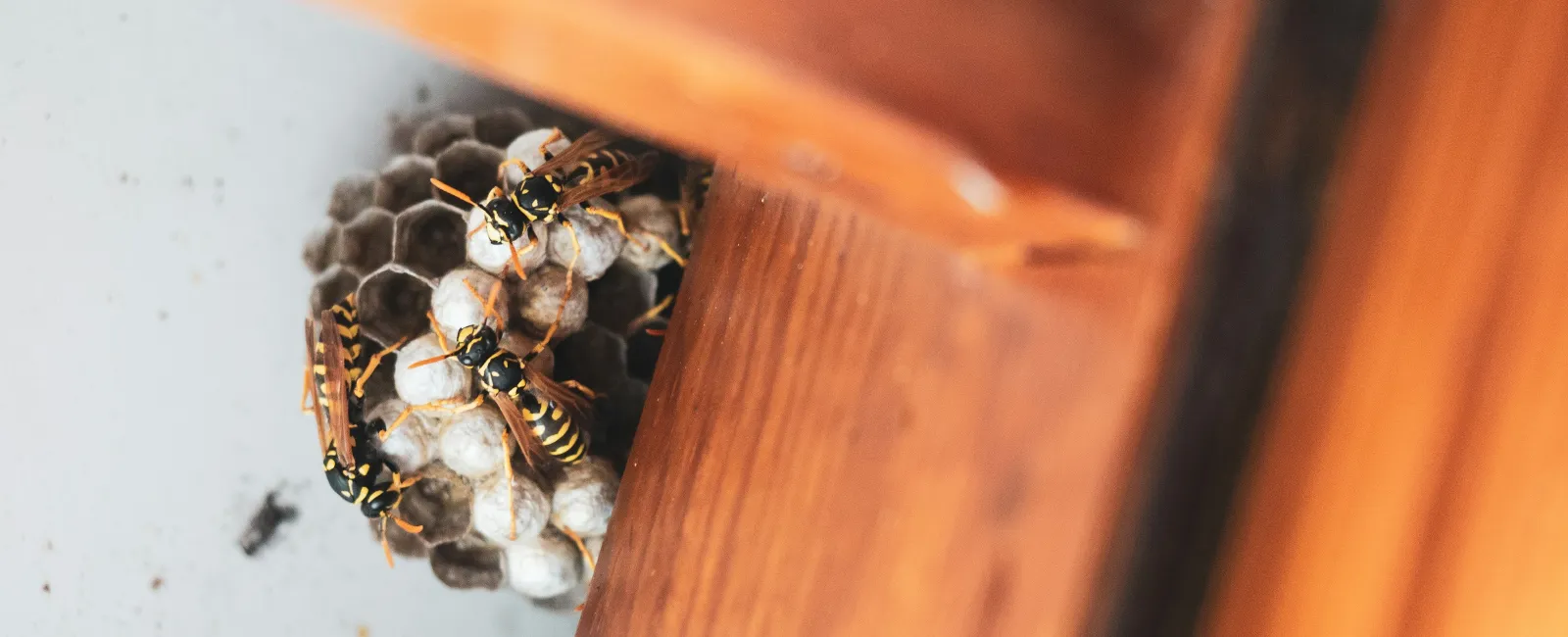
Wasp nest removal is not always as simple as it looks, and doing it wrong can lead to painful stings, allergic reactions, or an even bigger problem than the one you started with.
Here is what every homeowner should know before attempting to get rid of a wasp nest on their own.
Why Wasps Build Nests Around Your Home
Wasps are drawn to homes for the same reasons most pests are: shelter, food, and water. The eaves, soffits, and overhangs on your house provide protected spots to build a nest away from wind and rain. Garages, sheds, playground equipment, and covered patios are also popular locations.
In South Florida, the warm climate means wasps can remain active year-round, unlike colder states where colonies die off in winter. That makes wasp removal especially important here, because a nest that goes unaddressed in January can still be growing by March.
Wasps also tend to return to the same general area each year. If you had a nest removed last season but did not take steps to deter wasps from rebuilding, there is a good chance a new colony will set up shop in a similar spot.
How to Get Rid of a Wasp Nest: The DIY Approach
If the nest is small (roughly the size of a golf ball to a tennis ball), newly built, and in an accessible location, DIY wasp nest removal can be a reasonable option. Here is how to do it safely.
Wait until dusk or early morning. Wasps are least active during these hours. Most of the colony will be inside the nest and moving slowly, which reduces your chances of getting swarmed.
Wear protective clothing. Cover as much skin as possible. Long sleeves, pants, closed-toe shoes, gloves, and a hat are the minimum. If you have a bee veil or netting, even better. Wasps can sting multiple times, and they release a pheromone when threatened that signals other wasps to attack.
Use a wasp-specific spray. Look for a product labeled for wasps and hornets that sprays from at least 15 to 20 feet away. Stand at maximum distance, aim for the nest opening, and saturate the nest thoroughly. Do not use a flashlight directly on the nest at night, as the light can agitate the colony.
Wait 24 hours before removing the nest. After spraying, give the product time to work. Return the next day and check for activity. If the nest appears quiet and no wasps are flying in or out, you can carefully knock it down with a long stick or scraper and dispose of it in a sealed bag.
Clean the area. Wipe down the surface where the nest was attached with soap and water. This removes the pheromone markers that could attract a new colony to the same spot.
When DIY Wasp Nest Removal Becomes Dangerous
Not every nest is a good candidate for DIY removal. There are several situations where attempting it yourself is genuinely risky.
The nest is large. A mature wasp nest can hold hundreds or even thousands of wasps. Once a nest reaches the size of a softball or larger, the colony is well established and highly defensive. Spraying a large nest from a ladder while angry wasps swarm around you is one of the most common ways homeowners end up in the emergency room.
The nest is in a hard-to-reach location. Nests inside wall voids, under roof tiles, inside attic spaces, or high up under a second-story eave are difficult to treat safely. These situations often require specialized equipment and protective gear that most homeowners do not have.
You or a family member has a wasp allergy. For people with allergies to wasp stings, even a single sting can trigger anaphylaxis. If anyone in your household has a known allergy (or has never been stung and does not know their reaction), it is not worth the risk.
You have already been stung trying. If your first attempt did not go well and the wasps are now agitated, the nest is on high alert. A second attempt the same day is significantly more dangerous than the first. At that point, it is time to call in a professional.
There are multiple nests. Finding more than one active nest on your property suggests a larger wasp presence in the area. A pest control technician can do a full inspection and address all of them at once rather than having you play whack-a-mole with individual nests.
What a Professional Wasp Removal Looks Like
When you call a pest control company for wasp nest removal, the process is typically quick, safe, and thorough. A licensed technician will identify the wasp species (paper wasps, yellow jackets, and mud daubers all require slightly different approaches), locate all active nests on the property, and apply professional-grade treatments that eliminate the colony.
For nests in wall voids or other enclosed spaces, a technician can apply dust treatments that reach areas spray cans simply cannot. They can also seal entry points afterward to prevent wasps from rebuilding in the same location.
The entire process usually takes less than an hour for most residential properties, and you can feel safe using your yard and outdoor spaces again the same day.
If you are wondering whether DIY pest control is worth the effort in South Florida, the short answer with wasps is: it depends on the size and location of the nest. Small, accessible nests caught early are fair game. Anything beyond that is best left to someone with the right equipment and training.
How to Prevent Wasps From Coming Back
Once the nest is gone, a few simple steps can help deter wasps from rebuilding on your property.
Seal potential nesting sites. Caulk gaps around window frames, door frames, and soffits. Repair holes in siding and screen off vents and openings.
Remove food attractants. Keep outdoor trash cans sealed, clean up food and drink spills after barbecues, and avoid leaving pet food outside. Wasps are attracted to proteins and sugary substances.
Hang decoy nests. Wasps are territorial and tend to avoid building near another colony. Hanging a fake nest near common nesting spots can discourage them from setting up.
Schedule regular inspections. Catching a new nest while it is small makes removal simple and low-risk. A seasonal pest checklist that includes a quick walk around your home's exterior can save you a lot of trouble down the road.
Let Greg's Pest Handle It Safely
Wasp nest removal does not have to be a stressful, sting-filled experience. If you have spotted a nest on your property and you are not sure whether it is safe to handle on your own, let us take a look. At Greg's Pest Control, our bee and wasp removal service covers everything from small paper wasp nests to large, hard-to-reach colonies. We respond quickly, handle nests in tough spots, and make sure the job is done right.
Schedule your inspection today or give us a call.