
Body Shape
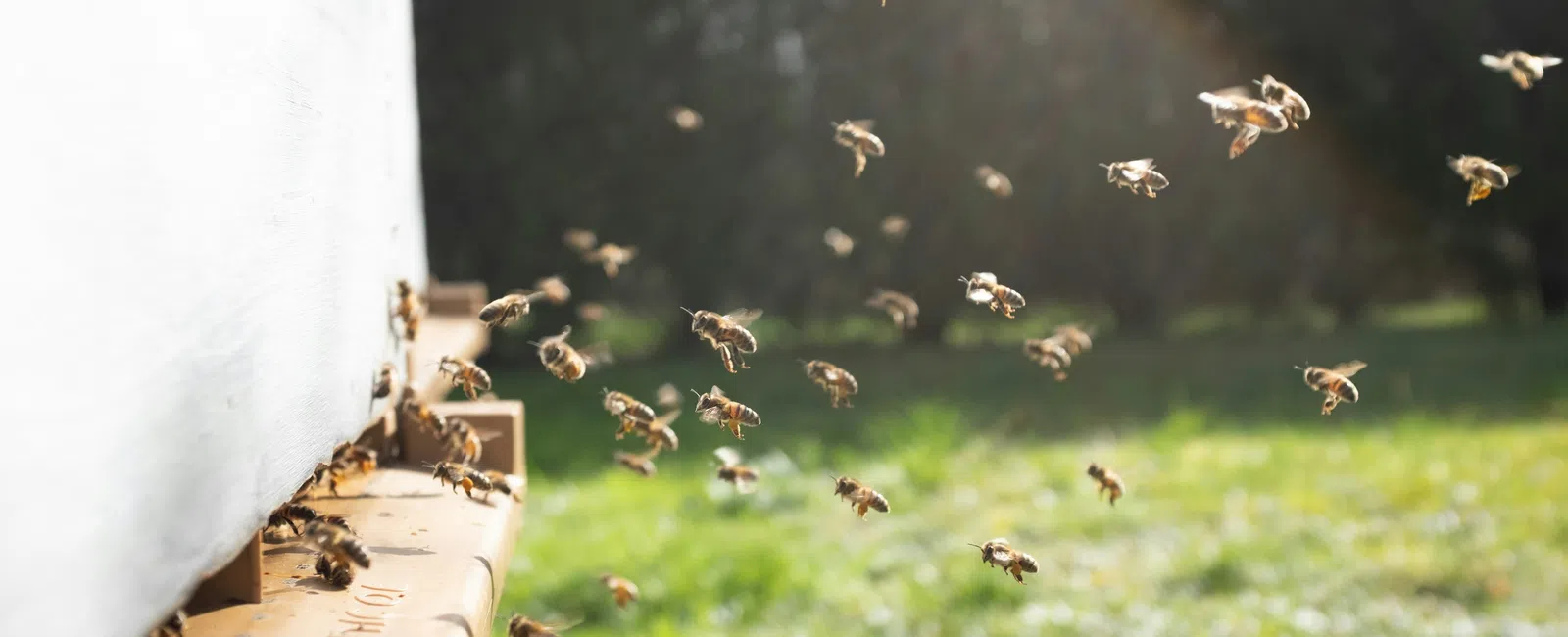
Start with texture. Bees are fuzzy. Branched hairs cover the thorax and abdomen, which is how they carry pollen, and that fuzz reads as soft and dusty even at a distance. Wasps look polished. Their bodies are smooth, hard, and often glossy.
Next, look at the waist. A wasp has a sharply pinched middle, sometimes so narrow the insect appears to be held together by a thread. Bees are thicker through the middle with no dramatic taper.
Then watch the flight. Wasps let their long back legs hang loose in the air. Bees tuck their legs up and fly with a rounder, heavier motion.
One local exception trips people up all the time. A big, loud insect with a fuzzy yellow thorax and a bald, shiny black abdomen is a carpenter bee, not a wasp. If you have already found perfectly round holes in fascia boards or deck rails, that damage points to a carpenter bee tunneling into wood rather than anything building a paper nest.
Wasp Nest vs Bee Nest
Often the nest identifies the insect faster than the insect does. The wasp nest vs bee nest comparison comes down to building material.
Paper wasps build an open, downward-facing comb that looks like a gray paper umbrella, usually tucked under eaves, soffits, patio ceilings, and grill lids. You can see the individual cells from below. Colonies stay small, often a few dozen adults.
Mud daubers build tubes of dried mud on stucco, block walls, and sheltered corners. These wasps are solitary and rarely sting, which makes a mud tube the least alarming thing on this list.
Yellow jackets build an enclosed paper nest hidden in the ground, a wall void, or a tree cavity, so the only visible sign is steady traffic in and out of a small opening. Studies show ground nests reaching 30 centimeters across, with one eastern yellowjacket nest holding more than 2,800 wasps. A hidden nest is the dangerous one.
Honey bees build wax comb, not paper. In South Florida, they frequently move into wall voids, soffits, water meter boxes, and utility vaults, and the entrance shows heavy, orderly traffic. If you find honey bee activity at an opening in your home, do not seal it, blocking the entrance drives the colony deeper into the structure instead of out of it.
Wasp vs Bee Sting
The bee stinger vs wasp stinger difference is the most practical thing on this page. A honey bee's stinger is barbed. It anchors in skin, tears free from the bee, and keeps pumping venom, so a honey bee stings once and dies. A stinger left behind in the skin is a reliable clue about what got you.
A wasp's stinger is smooth. Nothing anchors and nothing tears loose, so it can sting again immediately and as many times as it wants. That one design detail explains most of the wasp vs bee sting difference homeowners report, and why a wasp encounter escalates so fast.
Yellow jackets add a second problem. Injure one, and it releases an alarm pheromone that pulls the whole colony into defensive mode. This is why running a mower over a hidden ground nest produces a dozen stings instead of one.
Any sting can trigger a serious allergic reaction. Swelling that spreads well beyond the sting site, hives, or difficulty breathing warrants immediate medical care no matter which insect delivered it.
Difference Between Bees And Wasps In What They Want
Diet drives behavior, and behavior explains where you meet them. The core difference between bees and wasps is that bees are vegetarians collecting pollen and nectar, while wasps are predators that hunt other insects and also scavenge protein and sugar.
That is why wasps turn up at your grill, your trash can lid, and your soda can while bees stay on the flowering hedge. Yellow jackets raiding a picnic are foraging, not defending, and they behave less aggressively than they do near a nest. Proximity to the nest, rather than the species itself, sets your risk level.
What Treatment Each One Actually Requires
Wasps get treated. A paper wasp or yellow jacket nest on an occupied structure is a stinging hazard with no upside, and the work involves treating the colony, removing the nest, and applying residual product to the eaves, soffits, and ledges where new queens keep rebuilding. South Florida's climate keeps wasps active year-round, so one knockdown without follow-up rarely holds. Nest removal is also where most stings happen, and the real hazards of removing a paper wasp nest yourself go well beyond the obvious ones. Recurring pressure like this is what a monthly household pest plan is built to stay ahead of.
Honey bees follow different rules. Florida recognizes two lawful paths: live removal by a registered beekeeper, or eradication by a licensed pest control operator holding a General Household Pest or Lawn and Ornamental license. Either way, the comb has to come out of the wall. Abandoned comb attracts cockroaches and other insects, and that leftover honey and wax soak into the wall and stain through fresh paint. A job that ends with the bees gone and the comb still inside is not finished.
One caution on ID claims. You can't tell African from European honey bees by sight without laboratory analysis, so be skeptical of any company that charges a premium by declaring your bees "Africanized."
Get A Straight Answer About What Is In Your Yard
Greg's Aggressive Pest Solutions has worked in Broward County yards for more than 32 years as a family-owned, state-certified company. Our technicians can identify what is nesting on your property and handle bee and wasp removal safely, and our monthly protection plans cover 25 or more common household pests with pet- and family-conscious treatments applied by certified technicians.
Call us and describe what you are seeing to schedule your inspection today. A short conversation is usually enough to narrow it down before anyone gets stung.