
The Short Version, And Why It Is Not Good News
University entomologists describe it consistently: an offensive, sweet, musty odor produced by the insects' scent glands, most often compared to coriander or cilantro. They're even more consistent about the condition attached to it. The odor becomes detectable when an infestation is severe.
A handful of bed bugs in a box spring produces nothing a
person can smell. By the time a room carries an odor a human nose picks up, the
population has grown large enough to be generating that scent continuously,
across enough individuals, in enough places, to overwhelm the ordinary
background smell of a bedroom.
If you can smell bed bugs, you are not catching the problem early.
You are catching it late.
What The Smell Is Actually Made Of
The odor comes from two compounds bed bugs release
from scent glands on the underside of the thorax: (E)-2-hexenal and
(E)-2-octenal.
Published entomology research found that
the mix shifts depending on life stage. Adults produce (E)-2-hexenal at roughly
three times the rate of (E)-2-octenal. In nymphs, the ratio flips, with
(E)-2-octenal about three times more abundant. That small detail has a
practical consequence: a room full of young bed bugs and a room full of mature
ones do not smell quite the same, which is part of why descriptions vary so
much from person to person.
They serve in predator avoidance and defense, and they carry information
between bed bugs about mating. At high concentrations, they trigger alarm and
send nearby bed bugs scattering. At very low concentrations, the same mixture
does the reverse and attracts them.
The chemistry
producing the smell you are trying to identify is also part of how bed bugs
find each other and settle into groups. The odor is not a byproduct of an
infestation. It is part of the machinery that builds one.
Why Descriptions Vary So Much
Search this question, and you will find the smell described as musty, sweet, coriander, cilantro, damp laundry, rotting berries, wet towels, and a dozen other things. That inconsistency makes people doubt themselves, and
it should not.
Three things drive the variation. The life-stage ratio above
is one. The size and age of the infestation is another, because concentration
changes how any odor reads. The third is the cilantro problem: a well-documented share of people perceive cilantro as soapy rather than herbal, which
means the single most common comparison point in every article on this subject
lands completely differently depending on who is reading it.
There is a footnote here that is genuinely old. The word
coriander is often said to trace back to a Greek word for bedbug, supposedly
because of how the unripe fruit smells. Etymologists treat that as uncertain
rather than settled, and a competing explanation exists. People have made this comparison for a long time.
What To Look For Instead Of Smelling For
Since odor only shows up late, the evidence that matters is
visual, and it appears long before anything is detectable by nose.
Standard extension guidance is to look for blood stains from crushed bugs and rusty or dark spots of excrement on sheets, mattresses, bed clothes, and walls. Fecal spots, eggshells, and shed exoskeletons collect near hiding places, and live bed bugs turn up at every life stage alongside cast skins and spots of partially digested blood on sheets, clothing, and furniture.
Where you look matters as much as what you look for. Bed bugs sit in cracks, crevices, and seams, which means mattress piping, the folds of a box spring, headboard joints, the seams of upholstered furniture, and the gap where carpet meets baseboard. A flashlight held at a low angle finds them far more
reliably than a nose ever will.
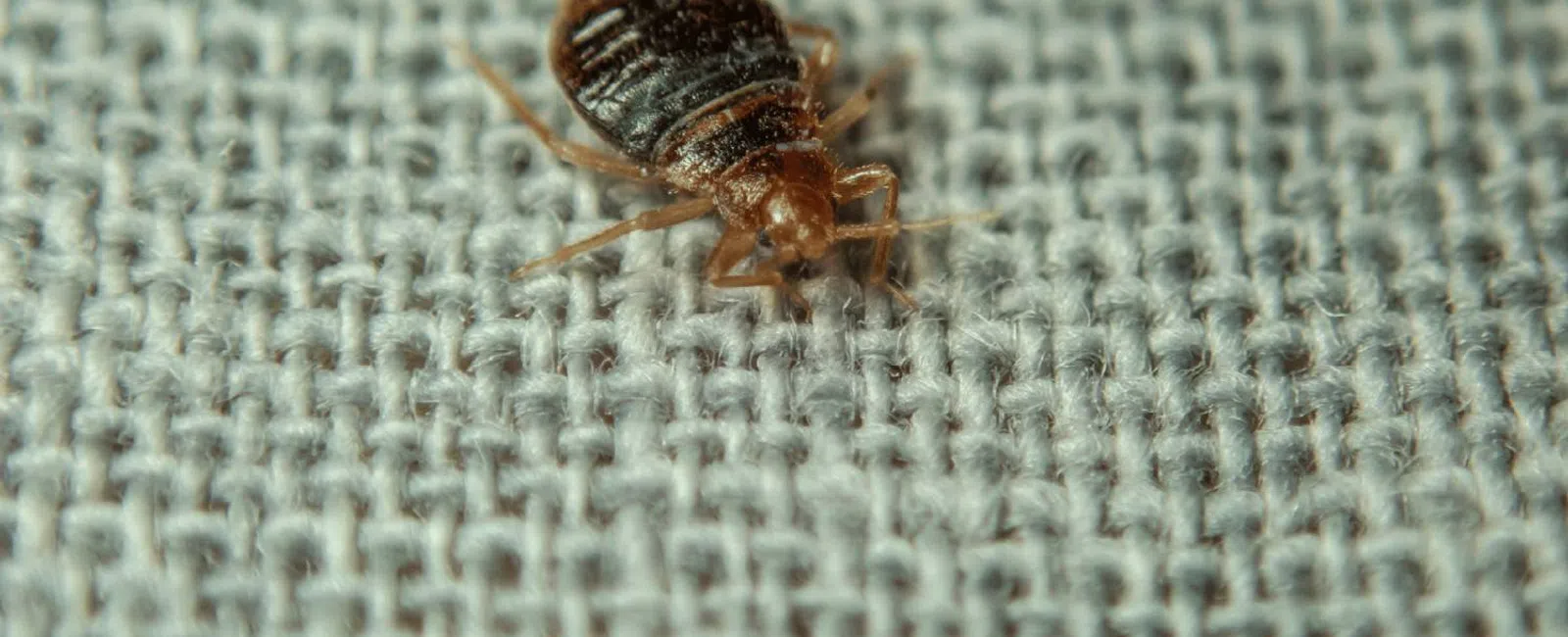
Running that same check once a month catches an infestation long before it reaches the odor stage, which is why preventing bed bugs has more to do with routine than with anything applied afterward. Size is what trips people up. Baby bed bugs are pale, barely larger than a pinhead, and different enough from adults that they get written off as harmless.
Smells That Are Not Bed Bugs
Humidity here keeps everything slightly damp, and damp is
the most common source of a musty smell in any Broward home. A humid closet, a
damp mattress that never fully dries, an air handler that needs service,
moisture in a wall cavity, a rug that got wet once: any of these produce
exactly the smell people worry about.
Rodents also produce a strong, persistent odor, and it is a
different smell entirely, closer to ammonia because it comes from urine. A dead
animal in a wall is different again and unmistakable once you have encountered
it.
The distinction that actually settles it is not the smell
itself. It is whether the visual evidence is there. An odor with no fecal
spotting, no cast skins, and no bites is almost never bed bugs.
Why This Gets Worse Faster In Multi-Unit Housing
If you live in a condo, apartment, or townhouse, the
timeline compresses.
Laboratory testing has clocked bed bugs covering 4.9 meters (about 16 feet) in five minutes. They do not need to be carried to reach the
next room, and in attached housing they move along the same shared voids and
utility runs everything else uses.
This is also where the severity threshold becomes a real
problem. A neighbor whose unit reaches the smellable stage has been feeding a
population for a long while, and by then the spread question is no longer
hypothetical. Owners renting units in Broward communities should treat this as
its own obligation, which is part of why pest
control for landlords works differently from a single-family home.
What To Do If You Think You Smell It
Do not start by trying to confirm the odor. Confirm the
evidence.
Strip the bed down to the mattress and check the piping,
seams, and tags. Look at the box spring, including underneath, where the fabric
is usually stapled. Check the headboard where it meets the wall. Look at the
nightstand joints and the seams of any upholstered chair in the room. Look for dark specks that smear rather than brush away, translucent shed
skins, and the bugs themselves.
If you find any of it, stop moving things between rooms.
Hauling a mattress through a house is one of the most reliable ways to turn a
one-room problem into a whole-home problem, and the alarm chemistry described
earlier means disturbing a harborage can push bed bugs to disperse rather than
stay put.
If you find nothing but the smell persists, the odds favor moisture over insects. That is worth chasing down for its own
sake.
Getting A Straight Answer In Broward County
Greg's Aggressive Pest Solutions has worked in Broward
County for more than 32 years, and bed bugs are one of the problems where
guessing costs the most, because the population doubles quietly while people
talk themselves out of what they are seeing.
Our technicians are state-certified; we inspect before we
treat, and we will tell you plainly if what you have is not bed bugs. That
answer is worth having either way.
If you have found evidence, or you have smelled something and want it settled, call us today to schedule your inspection, and we will come look. You can
also read more about how our bed bug removal service handles an active
infestation and what causes bed bugs to turn up in the first
place.