
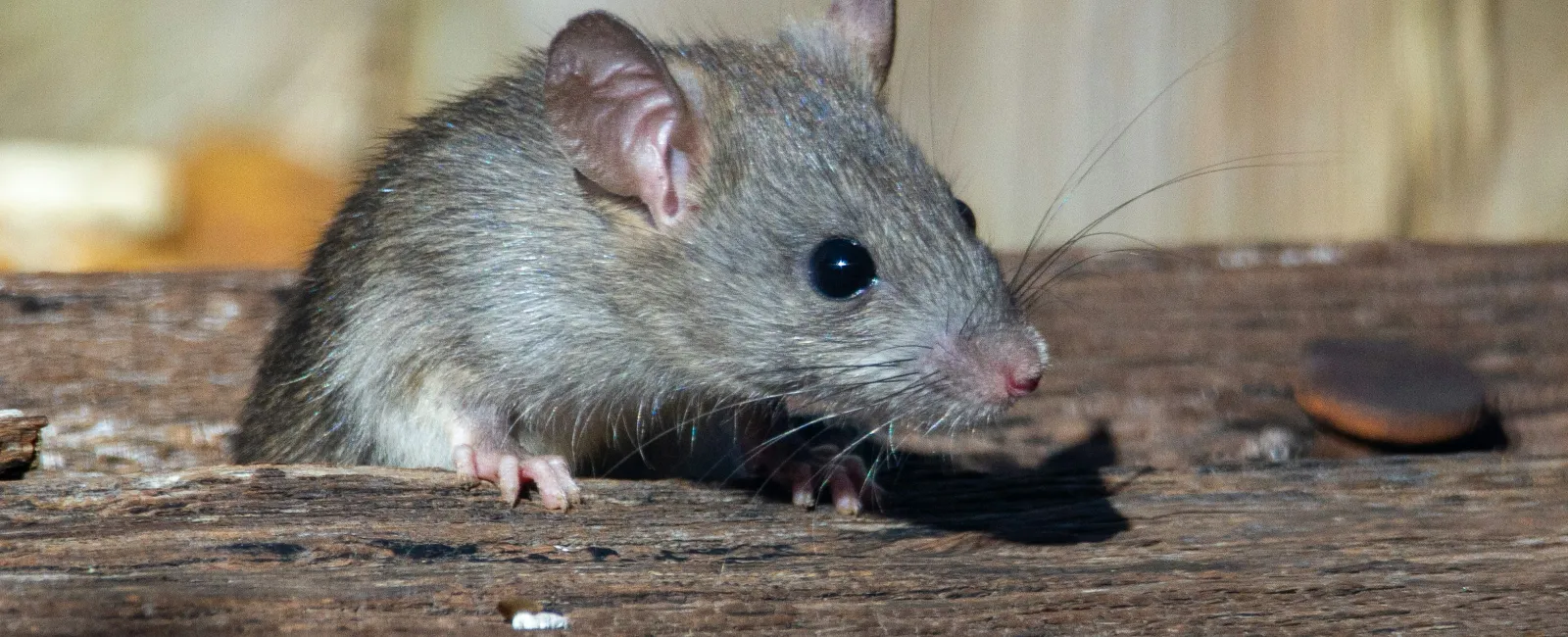
Figuring out whether you are looking at a rat or a mouse is one of the first steps toward solving the problem. It affects the type of traps you set, where you look for entry points, and how urgent the situation really is.
Are Rats and Mice Actually the Same Thing?
This is one of the most common questions homeowners ask, and the short answer is no. Rats and mice belong to different genera entirely. A baby rat is not just a grown-up mouse, and a small mouse will never mature into a rat. They are separate species with different body structures, habits, and behaviors.
That said, telling them apart can be tricky when you only catch a quick glimpse. A young rat can look a lot like an adult mouse at first glance. Knowing the specific physical and behavioral traits of each species will help you make the right call when comparing rats vs mice in your home.
Meet the Three Most Common Home Invaders
The Roof Rat
The roof rat (also called the black rat) is a skilled climber that prefers to live above ground. True to its name, this species loves attics, rafters, rooflines, and upper stories of buildings. If you hear running or scratching sounds coming from your ceiling at night, a roof rat is a likely suspect.
Roof rats have sleek, dark brown or black fur, large ears, and a tail that is longer than their body. They typically measure 13 to 18 inches from nose to tail tip and weigh between 5 and 10 ounces. They are especially common in warmer coastal areas, though they have been spreading into new regions over the past decade.
These rats are omnivores with a preference for fruits, nuts, seeds, and vegetables. They are cautious and intelligent, which is part of what makes roof rat control so challenging for homeowners who try to handle it on their own.
The Norway Rat
The Norway rat (sometimes called the brown rat or sewer rat) is the larger, heavier cousin of the rat family. Unlike the roof rat, the Norway rat prefers to stay close to the ground. It burrows under foundations, nests in basements and crawl spaces, and travels along ground-level pathways.
Norway rats have thick, brownish-gray fur, small ears relative to their head, and a shorter, scaly tail. They are stocky and strong, weighing up to 16 ounces or more. Their body length (not counting the tail) can reach 9 to 11 inches.
These rats are less picky eaters than roof rats. They will eat meat, grain, pet food, garbage, and just about anything else they can find. Norway rats are also strong swimmers, which is how they sometimes enter homes through damaged sewer lines.
The House Mouse
The house mouse is the smallest of the three and by far the most common uninvited guest in American homes. If you have a mouse in the house, it is almost certainly this species.
House mice are small and slender, typically only 3 to 4 inches long (body only) with a tail roughly the same length. They weigh less than an ounce and have light brown to gray fur, large ears relative to their head, and pointed snouts.
What makes house mice especially frustrating is their ability to squeeze through incredibly small openings. A mouse can fit through a hole the size of a dime, which means even well-maintained homes can have vulnerabilities. They breed rapidly, too, with a single female producing up to 35 young per year.
The Key Differences Between a Rat and a Mouse
The rat vs mouse question comes up constantly, and for good reason. When you are trying to figure out whether you are dealing with rats vs mice, focus on these key differences:
Size and weight. This is the easiest tell. Adult mice are 3 to 4 inches long and weigh under an ounce. Rats are significantly larger, ranging from 7 to 11 inches (body only) and weighing 5 to 16 ounces, depending on the species.
Droppings. The difference between rat poop and mouse poop is noticeable once you know what to look for. Mouse droppings are small (about the size of a grain of rice) with pointed ends. Rat droppings are much larger, about half an inch to three-quarters of an inch long, with blunt or rounded ends.
Tails and ears. Mice have thin tails covered in fine hair and proportionally large ears. Rats have thicker, scaly tails. Roof rats have larger ears than Norway rats, but both rat species have smaller ears relative to their head than mice do.
Behavior and nesting. Roof rats climb and nest high. Norway rats burrow and nest low. Mice are curious and will explore new objects quickly, while rats tend to be cautious and may avoid new traps or bait stations for several days.
Location of activity. Hearing noises in the attic or ceiling? That points toward roof rats. Scratching near the foundation, basement, or garage floor? Likely Norway rats. Finding tiny droppings in kitchen drawers or behind the stove? That is classic house mouse behavior.
Why Correct Identification Matters for Control
Misidentifying the rodent in your home can lead to wasted time and money. Roof rat control requires a completely different strategy than dealing with a Norway rat infestation or a house mouse problem.
For example, snap traps placed on the ground floor will do very little against roof rats that travel along overhead beams and roof lines. Similarly, bait stations designed for rats are too large for mice, who may steal the bait without triggering the mechanism.
Proper identification also helps your pest control professional choose the right exclusion methods. Sealing a gap at ground level is critical for Norway rats, but a roof rat might be entering through a gap around a vent or pipe on the second story. Since a mouse can fit through a hole as small as a quarter inch, the inspection for mice needs to be far more detailed.
What to Do If You Suspect a Rodent Problem
If you have spotted droppings, heard nighttime scratching, or noticed gnaw marks on food packaging, here is what we recommend:
Do not wait. Rodents reproduce quickly. A small problem can become a serious infestation within weeks.
Try to identify the species. Use the size, droppings, and behavior clues above to narrow it down. Take a photo of any droppings you find so your pest control technician can confirm the species.
Call a professional. Over-the-counter traps and repellents have their limits, especially with rats. A trained technician can identify the species, locate entry points, and build a treatment plan that actually solves the problem rather than just managing symptoms.
At Greg's Pest Control, we deal with all types of rats and mice. Whether you have a single mouse in the house or a full-blown rat infestation, our team knows how to identify the species, find how they are getting in, and eliminate the problem at the source. Schedule your inspection today or give us a call.