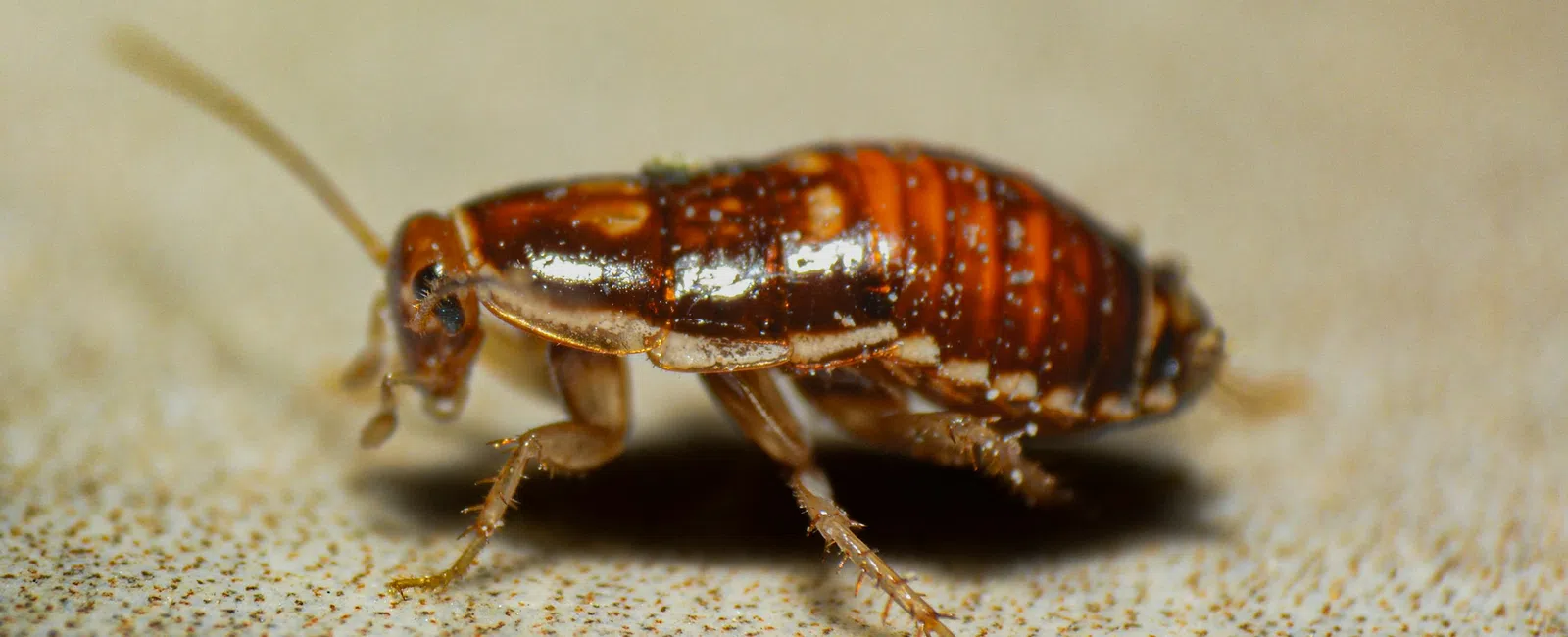
The biggest difference in a flea vs bed bug comparison is where each pest lives and how it moves. Fleas are tiny jumping insects that live on pets and drop their eggs into carpet and bedding. Bed bugs are flat, crawling insects that hide in mattresses and furniture and come out at night to feed on people. Getting the identification right matters, because each pest needs a completely different treatment plan, and treating for the wrong one gives the real infestation time to grow.
Flea vs Bed Bug at a Glance
If you only have a minute, these are the quickest ways to separate the two:
- Fleas jump. Bed bugs crawl and cannot jump or fly.
- Fleas are about the size of a sesame seed or smaller and narrow from side to side. Bed bugs are closer to an apple seed and flat from top to bottom.
- Fleas live on animals and in the places pets rest. Bed bugs live near the places people sleep.
- Flea bites cluster around the ankles and lower legs. Bed bug bites tend to show up on skin exposed during sleep, like the neck, arms and shoulders.
- Fleas leave black specks called flea dirt in pet fur and bedding. Bed bugs leave dark stains and shed skins along mattress seams.
How to Tell Fleas and Bed Bugs Apart by Appearance
If you can catch one, the insect itself is the most reliable answer. A strip of clear tape holds a specimen still long enough to look at it.
Size and Body Shape
Adult fleas measure roughly 1/16 to 1/8 of an inch long. Their bodies are compressed from side to side, so from above they look thin, almost like a sliver. Their color runs from reddish-brown to nearly black.
Adult bed bugs are larger, around 3/16 of an inch, and shaped like a flat oval. A bed bug that hasn't fed recently looks like a brown apple seed. After a meal, its body swells and turns a deeper red. Young bed bugs, called nymphs, are smaller and paler.
How They Move
Fleas have powerful back legs and launch themselves several inches at a time, so most people only see a dark speck vanish. Bed bugs have no wings and no jumping legs. They crawl at a steady walking pace, which is why you can usually catch one on a sheet or headboard if you're quick with a flashlight.
Flea Bites vs Bed Bug Bites
Bites are what usually send people searching, but they're the least reliable way to identify either pest. Reactions vary from person to person, and some people show no marks at all from bed bugs. Treat bites as a clue, not proof.
Where the Bites Show Up
Fleas usually bite low on the body. Picture someone walking across a carpet where a cat sleeps: the fleas jump onto the closest skin, which means ankles, feet and lower legs.
Bed bugs bite whatever skin is exposed while you sleep. The face, neck, arms, hands and shoulders are the most common spots. If you wake up with new bites on your forearms but your ankles were under the covers all night, that pattern points toward bed bugs.
What the Bites Look Like
Flea bites are small, raised red bumps, often grouped in clusters, and sometimes surrounded by a reddish halo. Bed bug bites are also red and itchy, and they often appear in a short line or a tight group of three or four. Bed bug bite reactions can show up hours or even days after the feeding, which makes them harder to trace back to a single night.
Either kind of bite can become infected from scratching. If a bite swells badly, spreads or shows signs of infection, have a doctor take a look.
Where Fleas and Bed Bugs Hide
Fleas spend their adult lives on a host animal, but most of the population in your home isn't on the pet at all. Eggs roll off into carpet fibers, rug edges, pet beds, upholstered furniture and the cracks between floorboards. Larvae develop there, feeding on flea dirt, and then spin cocoons. Those cocoons can sit quietly for weeks until vibration or body heat signals that a meal is nearby. That's why people can walk into a house that sat empty for weeks and get bitten almost immediately.
Bed bugs stay close to where people rest. They tuck into mattress seams and piping, box springs, bed frames, headboards, nightstands, baseboards and the edges of carpet near the bed. They arrive by hitchhiking on luggage, clothing, backpacks and secondhand furniture, and they have nothing to do with how clean a home is.
Signs of Fleas vs Signs of Bed Bugs
Both pests stay out of sight, so the evidence they leave behind is often easier to find than the insects. Here's what to look for:
- Pets scratching, chewing or losing fur around the neck, belly and base of the tail point to fleas.
- Black specks in pet fur or bedding that turn reddish-brown on a damp white paper towel confirm flea dirt.
- Small dark spots on mattress seams or sheets that look like marker dots point to bed bugs.
- Pale shed skins and tiny white eggs tucked into seams near the bed are a bed bug sign.
- A sweet, musty odor in the bedroom can mean a heavy bed bug infestation.
For fleas, check the pet's bed first. For bed bugs, pull back the fitted sheet and inspect the mattress seams with a flashlight.
Why Treatment Is Different for Each Pest
This is where a correct ID pays off. A flea plan aimed at a bed bug problem will miss the bedroom hiding spots entirely, and a bed bug plan won't touch the eggs and cocoons sitting in your carpet and yard.
Treating a Flea Problem
Flea control works best when the pet, the home and the yard are handled at the same time. Your veterinarian can recommend a flea preventive for each animal. Frequent vacuuming removes eggs and larvae, as long as you empty the vacuum outside right away.
Store-bought sprays usually kill only adult fleas, which leaves the next generation hatching a week or two later. Our flea and tick extermination service targets eggs, larvae and adults across the inside of the home and the yard, so the life cycle is broken instead of interrupted. If you have dogs or cats, our pest control for pet owners page explains how we approach treatment around animals.
Treating a Bed Bug Problem
Bed bugs are one of the hardest household pests to eliminate without professional help. Over-the-counter sprays and foggers rarely reach the seams, cracks and wall voids where bed bugs actually live, and they can scatter the bugs into new rooms. While you wait for treatment, keep sleeping in your own bed. Moving to the couch or a guest room tends to spread the infestation.
A real fix starts with a detailed inspection of every hiding spot. Our bed bug removal service uses methods that target every stage of development, comes with clear prep instructions before treatment and includes follow-up to confirm the job is finished.
Can You Have Fleas and Bed Bugs at the Same Time?
Yes, though it's uncommon. The two pests have nothing to do with each other, so having one doesn't increase your odds of the other. A pet owner who just brought home a used couch could end up with both. Fleas will bite people even though they prefer animals, and bed bugs will bite pets even though they prefer people. That overlap is why bites alone can mislead you.
Get a Clear Answer Before You Treat
When you can't tell what's biting you, a professional inspection settles it fast. Greg's Aggressive Pest Solutions has more than 32 years of experience identifying and treating fleas, bed bugs and other household pests, and every service is backed by a satisfaction guarantee with free re-treatments if pests return. You can see what to expect on our process page, or schedule service and have a licensed technician find out exactly what you're dealing with.