
If you have found clusters of
dried mud tubes on your stucco, under the eaves or inside the garage, you have
almost certainly met a mud dauber. These slender wasps are some of the least
aggressive stinging insects around South Florida homes, and most people only
notice them because of what they build. The nests deserve a closer look,
though. They tell you which species is using your house, if it is still active,
and what else is living around your eaves.
What Is a Mud Dauber?
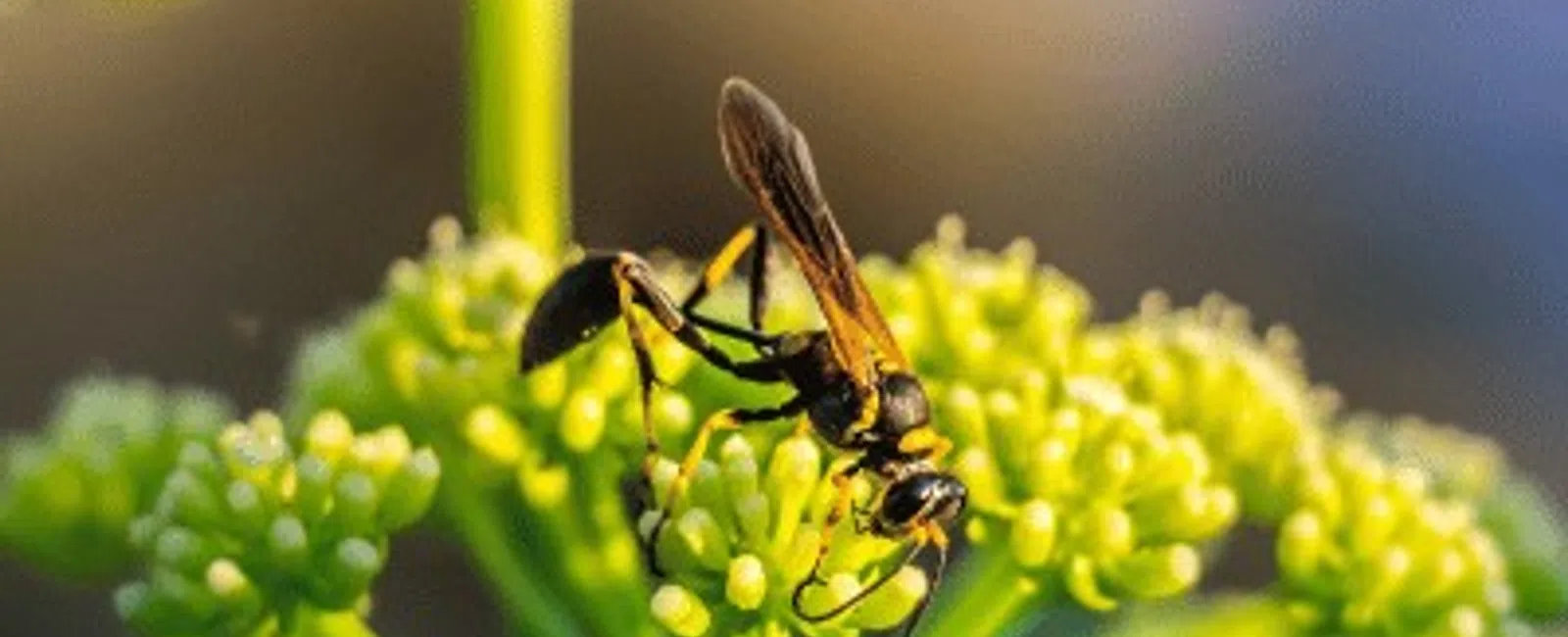
A mud dauber wasp, also called a
dirt dauber, is a solitary wasp that builds its nest from mud instead of chewed
wood fiber. Adults are usually black, sometimes with pale yellow markings or a
metallic blue sheen, and measure about half an inch to a little over an inch
long. The giveaway is the waist: a long, thread-thin stalk between the body
sections.
Unlike paper wasps and
yellowjackets, these wasps do not live in colonies. Each female builds and
stocks her own nest, which is why you usually see one wasp coming and going
rather than a crowd hovering around the entrance.
The Three Mud Daubers Homeowners See Most
Organ Pipe Mud Dauber
This shiny black wasp builds
long tubes of mud lined up side by side, like the pipes of an organ. The tubes
often run several inches down a wall or the underside of an overhang, and they
are the nests people most often mistake for something more serious.
Black and Yellow Mud Dauber
Black with yellow markings and
yellow legs, this species builds a rounded, lumpy nest that holds one to
several cells. Many are plastered over with a second layer of mud, so the
finished nest looks like a fist-sized clump of dried clay stuck to the wall.
Blue Mud Dauber
The iridescent blue-black
species rarely builds from scratch. It takes over abandoned black and yellow
nests and refurbishes them, and it hunts mostly cobweb spiders, including black
widows.
Mud Dauber vs. Wasp: Why They Act So Differently
Mud daubers are wasps, so the
useful comparison is with social wasps such as paper wasps and yellowjackets. A
social wasp nest holds a shared colony that defends itself as a group, and
disturbing one can bring out a lot of angry insects at once. This wasp has no
colony to defend. Its nest holds young sealed behind mud walls, and the mother
has usually moved on to build the next cell.
Nest material is the quickest
tell. Paper nests look gray and papery, while mud nests look like dried clay.
Bees add a third possibility, and the differences in body shape and nesting
habits between wasps
and bees matter because each one calls for a different response.
Are Mud Daubers Aggressive or Dangerous?
Generally, no. So, do mud
daubers sting? They can, but stings are uncommon. They are not aggressive and
rarely sting unless they are grabbed, stepped on, or pressed against skin. When
one does sting, the pain is usually mild, and the black and yellow species
rates a 1 on a pain scale that runs from 1 (mild) to 4 (severe).
They can turn defensive when
directly threatened, so handling one barehanded is still a bad idea. Anyone
with a known reaction to wasp stings should give every stinging insect the same
caution, mild reputation or not.
What's Inside a Mud Dauber Nest
Each tube or cell holds a single
egg and a supply of paralyzed spiders. The female stings each spider to
immobilize it rather than kill it, so the food stays fresh until her young
hatch. Researchers have found as many as a couple dozen small spiders packed
into one cell. The mud dauber larvae feed on that stockpile, develop inside the
sealed cell, and finally chew a hole through the mud wall to fly out.
That exit hole is the easiest
way to tell an old nest from an active one. Smooth, sealed cells may still have
wasps developing inside. Cells with a round hole in them are finished.
All those mud dauber nest
spiders also say something about your property. A wall dotted with nests
usually means there is a healthy spider population nearby, since spiders are
exactly what the wasps are hunting. That is part of what general
household pest control keeps in check around eaves, lanais, and entryways.
Mud Dauber Nest vs. Termite Tubes
Both are made of mud, and both
show up on Florida walls, so the mix-up is common. Subterranean termite shelter
tubes are usually about the width of a pencil, and they run from the soil up
foundation walls toward wood, connecting the colony underground to its food.
Dauber nests start and stop on the wall itself, usually under an overhang, and
never connect to the ground.
If a mud line climbs up out of
the dirt along your foundation, treat it as a termite question, not a wasp
question. Winged termites are another sign homeowners misread, and the
differences between flying
termites and ants are worth knowing for the same reason.
Why a Mud Dauber Nest on Your House Still Matters
The wasps rarely cause trouble
on their own. The nests are a different story. Mud dries hard on stucco, block, and painted trim, and prying it off can leave stains or chip the finish. Some
species repair and reuse old nests from previous seasons, so a few tubes in a
protected corner can turn into a whole wall of them over time.
Abandoned nests do not stay
empty, either. Blue mud daubers move into old ones, and leftover nests can draw
in more aggressive stinging insects looking for shelter. A garage, pool
enclosure, or shaded entryway that has hosted these wasps for a while tends to
keep attracting them.
What Professional Mud Dauber Removal Involves
This is the decision point for
most homeowners: leave them, or have them cleared. A single old nest in a back
corner of the garage is not urgent. Nests beside doors, on a pool cage, near a
play area, or anywhere people could brush against them are worth handling, and
so is a collection that keeps growing.
Mud dauber removal goes best
when the species is identified first, since the approach differs from paper
wasps and yellowjackets, and when active cells are dealt with before the mud
comes down. Greg's bee
and wasp removal technicians identify what is nesting, use
species-appropriate methods with protective equipment, and remove the
structures. For homes where nests keep coming back, a monthly
pest control visit includes exterior wasp nests, so eaves and entryways get
checked on a regular schedule.
Get the Mud Off Your Walls
These nests are a small problem that grows quietly, one tube at a time, and the longer they stay up, the more likely something else moves in.
Greg's Aggressive Pest Solutions has handled
stinging insects across Broward County for over 32 years, with appointments
available within 24 hours and free re-treatments if pests return, so call
us today to schedule a visit and have a technician identify and clear the
nests on your home.